Ginkgo biloba: dosage forms and which to choose
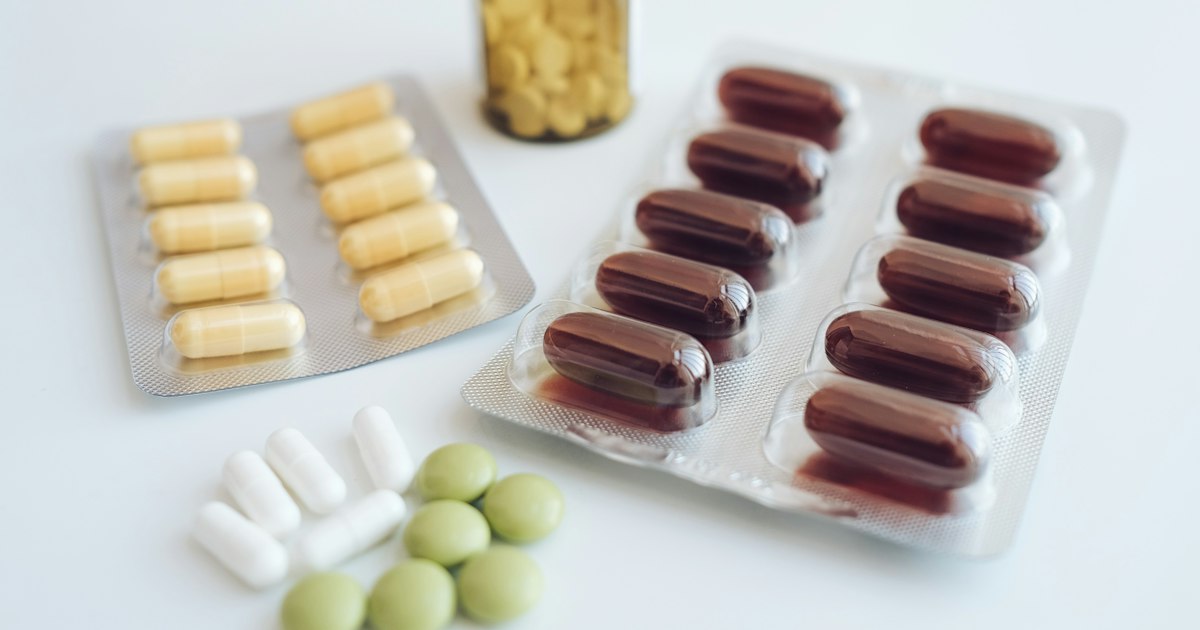
On the shelves of pharmacies and sports-nutrition stores, ginkgo biloba is presented in dozens of variants: from pharmacy tablets to tea, tinctures and "nootropic" complexes. However, the dosage form here matters not so much because of convenience as because of the content of active substances and impurities. The editorial team explains how the forms differ and what to look at on the label.
Why the dosage form matters
Most clinical data on ginkgo were obtained with the standardized leaf extract, in which the content of flavonol glycosides and terpene lactones is standardized, and ginkgolic acids are almost completely removed. Any other form is only an approximation to this benchmark, and often a rather distant one.
Dry leaf powder contains the same groups of substances but in much lower concentrations and together with ginkgolic acids. To obtain the same amount of terpene lactones as in 120 mg of extract, one would have to eat several grams of leaves, simultaneously receiving the undesirable impurities.
Liquid forms and teas differ even more. The content of active substances in them depends on the solvent, extraction time and quality of the raw material, and is almost never standardized as carefully as in pharmaceutical extracts.
Therefore, the choice of form is primarily a choice between predictability and chance. If the goal is to reproduce the conditions of the studies, there is only one option: standardized dry extract in capsules or tablets.
Overview of the main forms
Below we compare the forms most often found on sale. The assessments concern typical products; individual manufacturers may be better or worse than the average level.
| Form | Standardization | Ginkgolic acids | Convenience of dosing | Editorial assessment |
|---|---|---|---|---|
| Tablets/capsules with standardized extract (24/6) | Yes | Minimal (≤5 ppm in the pharmacopoeial standard) | High | Optimal choice |
| Capsules with leaf powder | No | Not controlled | Medium | Not recommended |
| Liquid extract / tincture | Rarely | Depends on the technology | Low (drops) | Only if standardized |
| Leaf tea | No | May be present | Low | As a drink, not as a remedy |
| Complexes ("nootropics", pre-workouts) | Sometimes | Depends on the raw material | Dose often too small | Assess the composition separately |
Tablets and capsules with standardized extract are the most studied and predictable option. Pharmacy products registered as medicinal products undergo quality control similar to ordinary medicines, whereas dietary supplements are controlled less strictly.
In complex products, ginkgo is often present in doses of 20–60 mg, which is much lower than the doses from studies. Such "presence on the label" works more for marketing than for effect.
Liquid forms can be convenient for people who do not swallow capsules, but they require careful study: the alcohol base, concentration and compliance with the standard must be clearly stated.

How to read the label
A quality label makes it possible to answer three questions: what raw material this is, how much active substance is in it and who is responsible for quality. Here is the list we advise paying attention to.
- Part of the plant."Leaf" (folium) must be indicated. Products made from seeds are not suitable for daily intake.
- Type of raw material."Extract" or "leaf powder" — this is a fundamental difference.
- Standardization.The content of flavonol glycosides (24 % or 22–27 %) and terpene lactones (6 % or 5–7 %).
- Dose of extract per serving.In milligrams of the extract itself, not the equivalent of dry leaves.
- Ginkgolic acids.An indication of a limit (for example, "≤5 ppm") is a sign of quality purification.
- Manufacturer and quality control.Production certification, independent batch testing.
Phrases like "equivalent to 6000 mg of leaves" should be treated critically. They only recalculate the mass of the extract through the extraction ratio and say nothing about the content of specific active substances.
The absence of information about standardization is not necessarily a sign of counterfeiting, but it deprives you of the ability to compare the product with studies.
Counterfeits and quality problems
Ginkgo is one of the most popular herbal supplements in the world, and therefore the market faces adulteration. The best-known scheme is adding cheap pure flavonoids (rutin, quercetin) or extracts of other plants to artificially "top up" the 24 % flavonoid figure in a laboratory analysis.
A standard analysis of total flavonoid content may not detect such adulteration, so conscientious laboratories use chromatographic methods that show the profile of individual compounds. For the consumer this means that the manufacturer's reputation and independent testing matter no less than the figures on the label.
Another problem is ginkgolic acids in poorly purified products. They not only increase the risk of allergy but also exhibited cytotoxic properties in laboratory studies. That is why pharmacopoeial standards strictly limit their content.
Finally, it is worth paying attention to the expiration date and storage conditions: flavonoids are sensitive to light and moisture, so a product in transparent packaging in the sun loses quality over time.
How to choose: a practical algorithm
Summarizing the above, we offer a simple selection algorithm suitable for both pharmacy products and sports supplements.
First, decide on your goal. If you are interested in reproducing the conditions of clinical studies, choose only standardized leaf extract in a dosage of 40, 80 or 120 mg per capsule or tablet — this makes it easier to reach the required daily amount.
Next, check the label against the list above. Give preference to manufacturers who publish batch certificates of analysis or undergo independent certification. For people who already take medications, it is reasonable to choose registered medicinal products with full instructions that spell out interactions.
Assess ginkgo complexes by the actual dose of each component. If ginkgo is present there in a dose several times smaller than the one studied, you should not count on its effect.
Editorial conclusions
The best-studied and most predictable form of ginkgo biloba is the standardized dry leaf extract in capsules or tablets that meets pharmacopoeial requirements.
Leaf powder, teas and non-standardized tinctures do not make it possible to control the dose of active substances and may contain ginkgolic acids. In complexes, ginkgo is often present in a token dose.
Careful reading of the label and choosing a trusted manufacturer protect against both ineffective products and counterfeits.
We also advise reviewing the materials "How to take Ginkgo biloba: dosage, timing, duration", "Myths about Ginkgo biloba" and "Bacopa monnieri: what it is and how it works".
References
- European Medicines Agency, Committee on Herbal Medicinal Products (HMPC). European Union herbal monograph on Ginkgo biloba L., folium. London: EMA; 2015.
- European Directorate for the Quality of Medicines & HealthCare. European Pharmacopoeia. Monograph: Ginkgo dry extract, refined and quantified. Strasbourg: Council of Europe.
- Leistner E, Drewke C. Ginkgo biloba and ginkgotoxin. J Nat Prod. 2010;73(1):86–92.
- Unger M. Pharmacokinetic drug interactions involving Ginkgo biloba. Drug Metab Rev. 2013;45(3):353–385.
- National Toxicology Program. Toxicology and carcinogenesis studies of Ginkgo biloba extract in F344/N rats and B6C3F1 mice (gavage studies). NTP Technical Report 578. Research Triangle Park (NC): NTP; 2013.
- Kennedy DO, Scholey AB, Wesnes KA. The dose-dependent cognitive effects of acute administration of Ginkgo biloba to healthy young volunteers. Psychopharmacology (Berl). 2000;151(4):416–423.
Andriy Melnyk
A strength-sports coach and author of programs for beginner and intermediate levels. Writes about training planning.