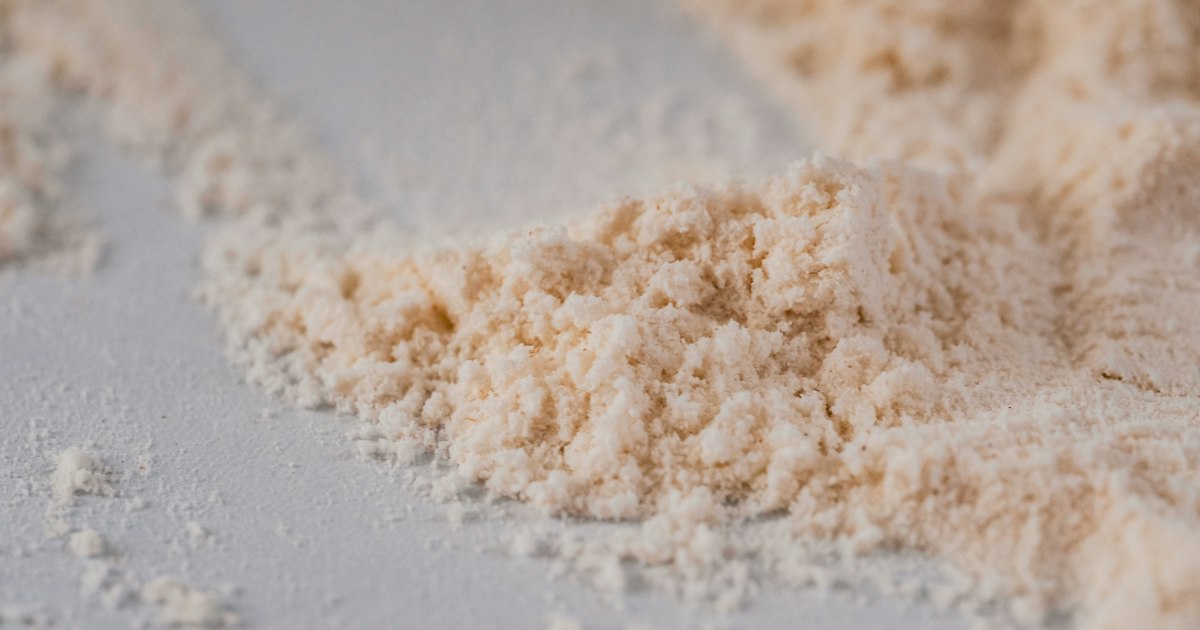
Bacopa monnieri: what it is and how it works

Bacopa monnieri is an herb from Ayurvedic medicine that over the past twenty years has turned into one of the most popular "nootropics" in the world. Unlike many fashionable herbal supplements, it has several randomized clinical studies and meta-analyses. The editorial team explains what kind of plant this is, which substances are responsible for its action and what can realistically be expected from it.
A plant from Ayurveda
Bacopa monnieri (Bacopa monnieri) is a small creeping herbaceous plant that grows in moist and marshy areas of tropical and subtropical Asia, in particular in India. In the Ayurvedic tradition it is classified among the "medhya rasayana" remedies, that is, those that support the mind and memory.
In the Indian tradition, bacopa is often called "brahmi". However, this name is sometimes also applied to another plant — Asiatic pennywort (Centella asiatica, gotu kola). Because of this confusion, in old sources and on the labels of some products it is hard to understand which plant is meant, so it is worth relying on the Latin name.
For making supplements, the aerial part of the plant — the stems and leaves — is used. Modern products mostly contain standardized extracts rather than simply dried herb, since the content of active substances in the raw material significantly depends on the conditions of cultivation and harvesting.
Scientific interest in bacopa grew in the 1990s–2000s, when the first randomized placebo-controlled studies of its effect on memory were conducted in Australia and India. It was they that shaped the modern view of bacopa as a slow-acting remedy.
Active substances
The main biologically active compounds of bacopa are considered to be bacosides — dammarane-type triterpene saponins. The most studied is a mixture called bacoside A: it consists of several related saponins, in particular bacoside A3, bacopaside II and bacopasaponin C.
In addition to bacosides, the plant contains alkaloids (brahmine, herpestine), flavonoids, sterols and other saponins. Their contribution to the overall effect has been studied far less, and most researchers focus specifically on the bacosides.
| Group of compounds | Examples | Described role |
|---|---|---|
| Triterpene saponins | Bacoside A3, bacopaside II, bacopasaponin C | The main "marker" substances for standardization |
| Alkaloids | Brahmine, herpestine | Little studied |
| Flavonoids | Derivatives of luteolin and apigenin | Antioxidant action |
| Sterols | Stigmasterol, β-sitosterol | Auxiliary components |
Clinical studies used several standardized extracts that differ in the method of production and the content of bacosides. Therefore, products from different studies, and even more so arbitrary supplements, should be compared with caution.
Bacosides are relatively lipophilic molecules. This is one of the reasons why bacopa is often recommended to be taken together with food containing fats: in traditional medicine it was consumed with ghee or milk.

Mechanisms of action
The mechanisms of action of bacopa have been studied mainly in cell cultures and animals. The reviews by Russo and Borrelli (2005) and Aguiar and Borowski (2013) summarize several directions that may explain the cognitive effects.
- The cholinergic system.In animals the extract affected the activity of acetylcholinesterase and the level of acetylcholine — a neurotransmitter important for memory.
- Antioxidant protection.Bacopa increased the activity of antioxidant enzymes in the brain of animals.
- Neuron structure.In rodents, changes in dendritic branching in areas associated with learning have been described.
- Monoamines and stress.Effects on the serotonergic system and stress markers have been reported.
- β-amyloid.In animal models of Alzheimer's disease the extract reduced amyloid deposition.
A common feature of these mechanisms is their gradual, "structural" nature. Bacopa does not act like a stimulant that gives an instant surge of energy; it probably changes the functioning of neurons over weeks. This fits well with clinical observations.
At the same time, it must be remembered that animal data are not always transferable to humans, and the doses in experiments often substantially exceed human ones on a body-mass basis.
What clinical studies show
The first widely cited study was conducted by Stough's group in Australia: healthy adults took 300 mg of standardized extract per day for 12 weeks. Compared with placebo, the speed of processing visual information, the speed of learning and memory consolidation improved, and the effects did not appear immediately.
The study by Roodenrys and colleagues (2002) showed an improvement in the retention of new information after long-term intake. Calabrese and colleagues (2008) in elderly people recorded an improvement in delayed word recall and a reduction in anxiety and depression indicators after 12 weeks of intake.
The systematic review by Pase and colleagues (2012) and the meta-analysis by Kongkeaw and colleagues (2014) concluded that bacopa has the potential to improve memory, primarily free recall, as well as reaction speed in some tests. At the same time, the authors noted the small number of studies, the different extracts and the moderate magnitude of the effects.
Thus, bacopa is one of the few plants for which there are reproducible positive clinical data on memory, but it is not a "magic pill": the effect is moderate and requires long-term regular intake.
Tolerability and limitations
The most frequent side effects of bacopa in clinical studies concerned the digestive tract: nausea, abdominal cramps, increased peristalsis, diarrhea. Taking it together with food often reduces these complaints.
Individual study participants noted fatigue or drowsiness, which is consistent with the moderate "calming" effect described in animal models. Therefore, people who drive vehicles or work with machinery should assess their reaction at the start of intake.
Data on safety during pregnancy, breastfeeding and in children are insufficient, so in these groups intake without a doctor is not recommended. Caution is also needed with thyroid diseases, the intake of drugs affecting the cholinergic system, and sedatives.
Bacopa is not on the WADA Prohibited List, so for athletes there are no formal restrictions. However, as with any supplement, there is a risk of product contamination, so preference should be given to trusted manufacturers.
Editorial conclusions
Bacopa monnieri is an Ayurvedic plant whose main active substances are the triterpene saponins bacosides. Its mechanisms of action are associated with the cholinergic system, antioxidant protection and an effect on the structure of neurons.
Randomized studies and meta-analyses indicate a moderate improvement in memory, especially recall, after 8–12 weeks of regular intake of the standardized extract.
The most frequent adverse effects are digestive disorders; taking it with food usually improves tolerability.
We also advise reading our articles "The benefits of Bacopa monnieri for athletes: the evidence base", "Ginkgo biloba: what it is and how it works" and "Myths about Ginkgo biloba".
References
- Russo A, Borrelli F. Bacopa monniera, a reputed nootropic plant: an overview. Phytomedicine. 2005;12(4):305–317.
- Aguiar S, Borowski T. Neuropharmacological review of the nootropic herb Bacopa monnieri. Rejuvenation Res. 2013;16(4):313–326.
- Stough C, Lloyd J, Clarke J, et al. The chronic effects of an extract of Bacopa monniera (Brahmi) on cognitive function in healthy human subjects. Psychopharmacology (Berl). 2001;156(4):481–484.
- Roodenrys S, Booth D, Bulzomi S, et al. Chronic effects of Brahmi (Bacopa monnieri) on human memory. Neuropsychopharmacology. 2002;27(2):279–281.
- Calabrese C, Gregory WL, Leo M, et al. Effects of a standardized Bacopa monnieri extract on cognitive performance, anxiety, and depression in the elderly: a randomized, double-blind, placebo-controlled trial. J Altern Complement Med. 2008;14(6):707–713.
- Pase MP, Kean J, Sarris J, et al. The cognitive-enhancing effects of Bacopa monnieri: a systematic review of randomized, controlled human clinical trials. J Altern Complement Med. 2012;18(7):647–652.
- Kongkeaw C, Dilokthornsakul P, Thanarangsarit P, Limpeanchob N, Norman Scholfield C. Meta-analysis of randomized controlled trials on cognitive effects of Bacopa monnieri extract. J Ethnopharmacol. 2014;151(1):528–535.
- World Anti-Doping Agency. The World Anti-Doping Code: International Standard — Prohibited List. Montreal: WADA; оновлюється щороку.
Andriy Melnyk
A strength-sports coach and author of programs for beginner and intermediate levels. Writes about training planning.